Choosing a frame for preserved moss: what works and why
What to look for in a frame for preserved moss
Preserved moss has become a popular way to bring greenery indoors without the upkeep of live plants. But the way you frame that moss matters more than many people expect. A good frame does not just hold the moss in place, it protects the material, controls how light hits it, and affects how the whole piece reads in a room. The wrong frame can make the moss look flat, dusty, or poorly finished. The right one makes the moss feel intentional and polished.
This article covers the practical points that separate a so-so frame from a great one when you are working with preserved moss. Whether you are putting together a piece yourself or choosing a finished panel, understanding these details helps you get a result that looks good for years.
Frame depth and why it matters
Preserved moss is not a flat material. It has volume, texture, and a natural unevenness that gives it life. A shallow frame pinches that volume and flattens the moss against the backing board, which removes the depth that makes the moss look realistic. A deeper frame, often called a shadow box, gives the moss room to sit naturally. The moss can rise and fall within the frame, creating shadows and highlights that change with the light in the room.
Frame depth also affects how dust settles. In a shallow frame, the moss sits close to the glass or the open front, so dust lands directly on the surface. In a deeper frame, the moss is set back from the front edge, which gives some protection from airborne dust and accidental brushing. A depth of around 20 to 30 millimetres is common for preserved moss pieces, but deeper frames work well for thicker moss varieties or when you want a more sculptural look.
Open front versus glazed frames
One of the first decisions is whether to use a frame with glass or acrylic glazing, or an open-front frame that leaves the moss exposed. Each has trade-offs.

Open-front frames show the full texture of the moss without any glare or reflections. The moss feels more immediate and tactile. The downside is that the moss collects dust more quickly, and it is easier for someone to touch the moss by accident. Preserved moss is delicate, repeated touching can break the brittle stems and leave bare patches. An open-front frame works best in a low-traffic area or on a wall where people will not brush against it.
Glazed frames protect the moss from dust and handling. A matte or non-glare acrylic front reduces reflections while still shielding the moss. The moss stays cleaner longer, and the piece needs less maintenance. The trade-off is a slight separation between the viewer and the material. Some people prefer the direct look of an open frame; others value the protection. Your choice depends on the room and how much upkeep you want to do.
Sealing the back of the frame
A preserved moss frame needs a sealed back. Preserved moss is treated with a glycerin-based solution that keeps it soft and flexible. That solution can seep into the backing board if the back is not sealed, leaving stains or causing the board to warp over time. A good frame uses a backing board with a moisture barrier, or the maker adds a layer of foil tape or a sealed dust cover to the back.
The seal also keeps out insects and dust. Even though preserved moss is treated, a gap at the back can let small bugs crawl in. A tight seal keeps the inside of the frame clean. When you are buying a frame or building one, check that the back closes fully and that there are no gaps around the edges.
Mounting hardware and wall placement
The frame itself is only half the equation. The hardware that holds it on the wall affects how the piece looks and how safe it is. Preserved moss is heavier than it looks. A medium-sized panel can weigh several kilograms once the moss, backing, and frame are combined. Cheap picture wire or flimsy D-rings can fail over time. A good frame uses sturdy hardware, two D-rings on each side, or a French cleat for larger pieces.
The hanging method also determines how flat the piece sits against the wall. A single wire can let the frame tilt forward at the top, especially with a deep shadow box. A French cleat holds the frame flush to the wall and distributes the weight evenly. For most moss pieces, a cleat is the better choice if the frame is larger than about 60 centimetres on any side.
Visual balance with the room
A frame is not just a container. It is part of the overall visual composition. The colour and style of the frame should work with the moss and with the room where it hangs. Dark wood frames tend to recede, letting the moss stand out. White or light frames create more contrast and can make the piece feel airier. Metal frames, especially black or brushed aluminium, give a modern look that pairs well with minimalist interiors.

The proportion of the frame also matters. A thin frame can make a large moss panel feel unfinished, as if the moss is spilling out. A thick frame gives the piece weight and presence. But a frame that is too thick can overwhelm a small piece of moss. The goal is a frame that frames the moss without competing with it. Think of it as a visual border that guides the eye toward the moss, not away from it.
Another factor is the wall area around the piece. A large frame on a small wall can feel cramped. A small frame on a large, empty wall can look lost. The frame should relate to the scale of the wall and the furniture nearby. A good rule of thumb is that the width of the frame should be about two-thirds to three-quarters of the width of the furniture below it, or of the wall space if the piece is hanging alone.
Hanging height and viewing angle
Once the frame is chosen, where you put it matters just as much. The centre of the piece should be at eye level for most people in the room. That usually means the centre is around 145 to 150 centimetres from the floor. But that number changes if the piece hangs above a sofa, a console table, or a headboard. In those cases, the bottom edge of the frame should sit about 10 to 15 centimetres above the furniture to create a visual connection.
Lighting also affects how the moss reads. Direct sunlight can fade the preserved colour over time, even though the moss is treated. Indirect light or accent lighting from a picture light or a track light brings out the texture without damaging the colour. If you use a picture light, aim it so it hits the moss at an angle, not straight on, to avoid flattening the depth.
Framed moss art works as a focal point in a room because the texture draws the eye. But it only works well if the frame and placement support that role. A piece hung too high loses its connection to the rest of the room. A piece hung too low can feel crowded by furniture.
Room scale and the overall effect
The scale of the room should guide the size of the frame. In a large room with high ceilings, a single small framed moss panel can feel like an afterthought. A larger panel or a grouping of several frames creates a stronger visual statement. In a smaller room, a single medium-sized piece can be enough to add warmth without overwhelming the space.
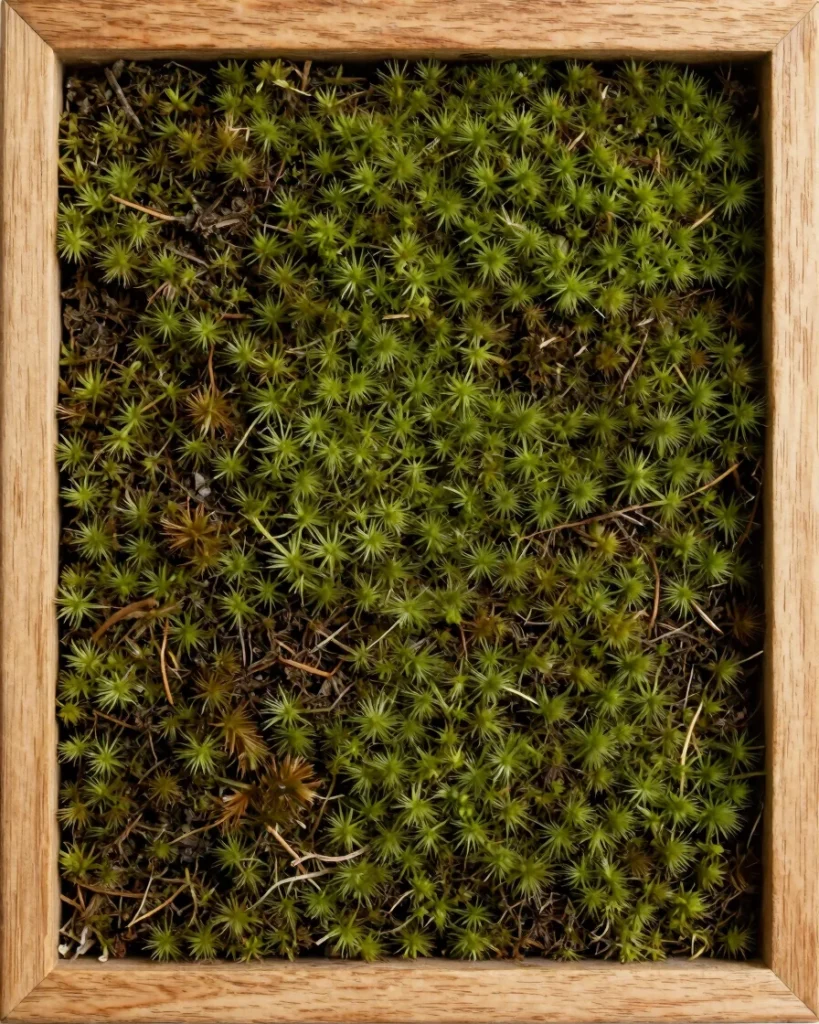
Think about how the moss will relate to the other textures in the room. A rough, textured moss looks at home in a room with natural materials like wood, stone, or linen. A smoother preserved moss, like reindeer moss, works well in a more polished space with metal and glass. The frame bridges the moss and the room, so it should echo a material or colour that appears elsewhere in the space.
A good frame for preserved moss is not an afterthought. It is part of the design. The depth, the glazing, the seal, the hardware, and the proportions all work together to make the moss look its best. When those elements are chosen with care, the result is a piece that feels natural and finished. It becomes something you want to look at, not just something that fills a wall.
Home is where the details add up. A well-framed moss piece can make a room feel more grounded and alive. And because preserved moss needs no water or sunlight, the piece stays the same year after year. That stability is part of its appeal. You choose it once, frame it well, and it becomes a quiet, constant part of your home. The frame is what makes that possible. Choose a frame that respects the material, and the result will speak for itself.